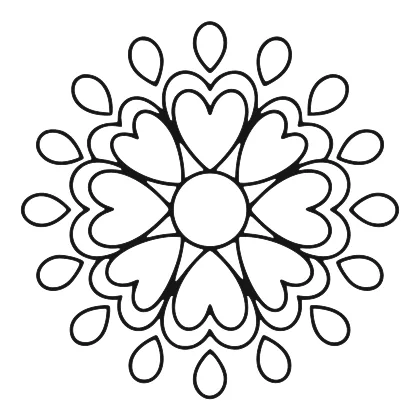
Sun and Moon Mandala Coloring Page
You might also like

Print or save this sheet
A full-size picture with no website around it. Free to use at home, in a classroom or in a library.
Download PNGAbout this coloring page
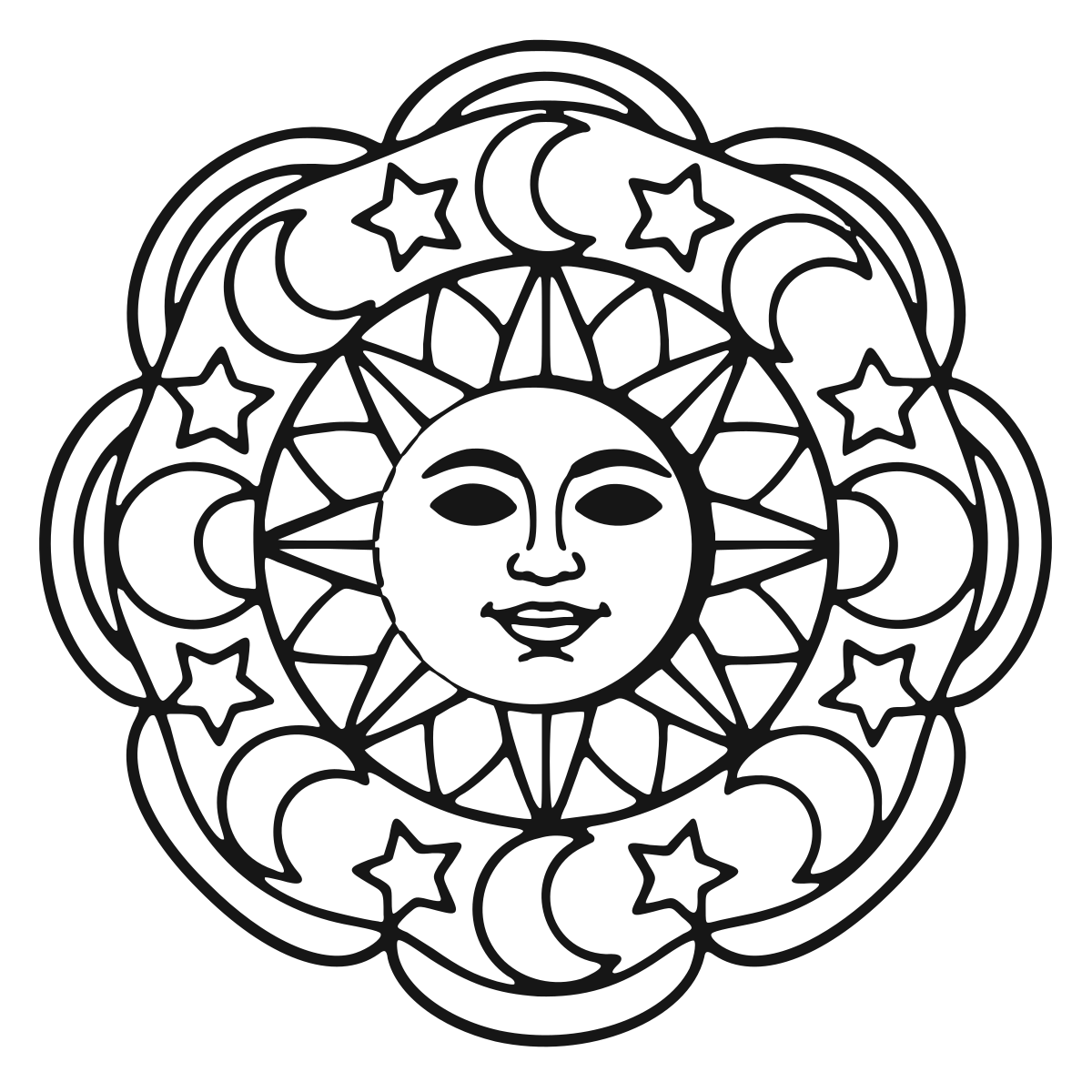
A sun face sits at the centre, ringed by alternating crescent moons and stars. The design has an obvious invitation built into it, which is to split the palette in two: warm colors through the sun and its rays, cool ones through the moons and the outer ring. Done cleanly it gives the piece a day-and-night reading that a single palette cannot. The temptation is to make the division exactly halfway, and it is worth resisting; letting the warm colors bleed one ring further out than the symmetry suggests looks considerably better than a hard border. The sun face is the largest single area and is best left until the surrounding rings have set the tone. Colored pencil suits this better than marker. The warm and cool halves need to meet somewhere in the middle rings, and pencil lets you blend across that meeting point in a way a marker edge cannot.
Color suggestions
- Warm sun, cool moons
- Gold and deep blue
- Let the warm side bleed one ring past centre
- Stars in a single accent color
Did you know?
- The sun is about four hundred times wider than the moon and also about four hundred times further away, which is why the two appear almost exactly the same size from Earth. That coincidence is the only reason total solar eclipses look the way they do.
- The moon is drifting away from Earth at roughly three point eight centimetres a year, so those perfect eclipses will eventually stop happening altogether.
Frequently Asked Questions
How should the palette be split?
Warm through the sun and its rays, cool through the moons and outer ring. Letting the warm colors run one ring further than the symmetry suggests reads better than a hard halfway division.
Which part should be colored last?
The sun face. It is the largest single area, so it is easier to judge once the rings around it have established the overall tone.