Rose Blossom Coloring Page
You might also like
Print or save this sheet
A full-size picture with no website around it. Free to use at home, in a classroom or in a library.
Download PNGAbout this coloring page
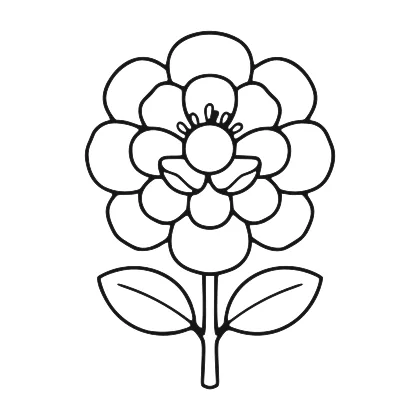
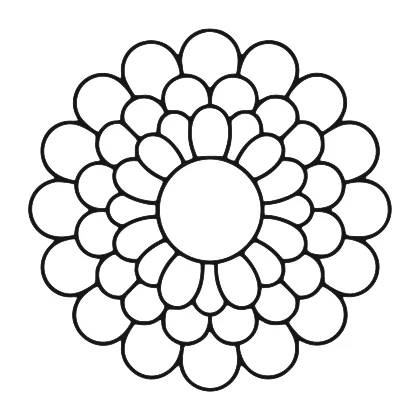
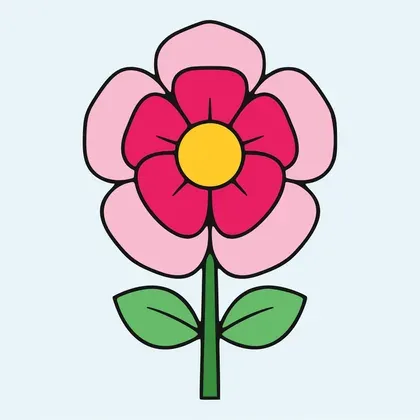
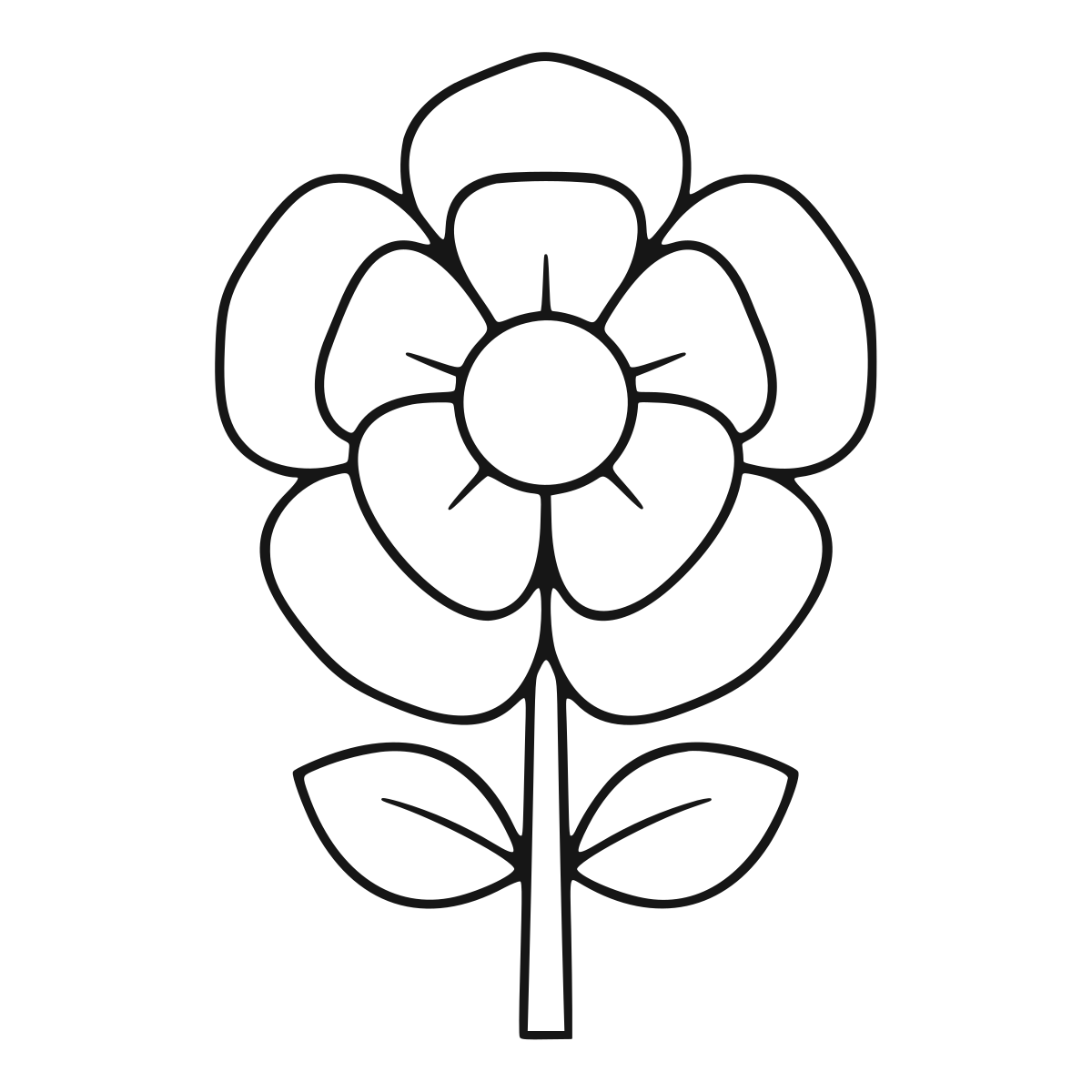
A rose seen face-on, drawn as three interlocking rings of petals — seven outside, six in the middle, five within — closing on a curled centre, with a stem, two sepals and two leaves below. There are few enough areas here that this becomes a shading exercise as much as a filling one. The nested construction is the whole point: color every ring the same hue and vary only the depth — lightest at the outer edge, darkest in the heart — and the flat drawing gains real dimension. It is the fastest way to learn tonal shading on a coloring page, and it works with pencils, markers or the online marker tool, whose strokes darken where they overlap. Classic red is the obvious choice but the least forgiving; peach, dusty pink and pale yellow all show tonal variation far more clearly. Printed at A4 the outermost ring of petals is wide enough to blend two pencil tones within a single petal, and that internal blend is where most of the illusion of depth actually comes from.
Color suggestions
- One hue, three depths, dark at the centre
- Peach or dusty pink shows shading best
- Deep green leaves
- Leave the outer petal edges pale
Did you know?
- Roses have been cultivated for around 5,000 years, with the earliest known garden cultivation in China, long before they became a symbol of romance in Europe.
- What everyone calls rose thorns are botanically prickles. True thorns are modified stems growing from deep inside the plant, while a rose's are surface outgrowths that can be snapped off cleanly by hand.
Frequently Asked Questions
How do I shade a rose so it looks three-dimensional?
Use one color and vary only its depth. Keep the outer ring palest and make each ring inward progressively darker, with the curled centre darkest. The nested rings are drawn specifically to make this work.
Which color is easiest to shade a rose in?
Peach or dusty pink. Deep red hides tonal differences because the color is already dark, so shading disappears; a paler hue shows every step of the gradient clearly.
Does the online marker tool build up like a real marker?
Yes. Marker strokes are semi-transparent and darken where they overlap, so a second pass over the base of a petal deepens it exactly as a real marker would.