Peony Blossom Coloring Page
You might also like
Print or save this sheet
A full-size picture with no website around it. Free to use at home, in a classroom or in a library.
Download PNGAbout this coloring page
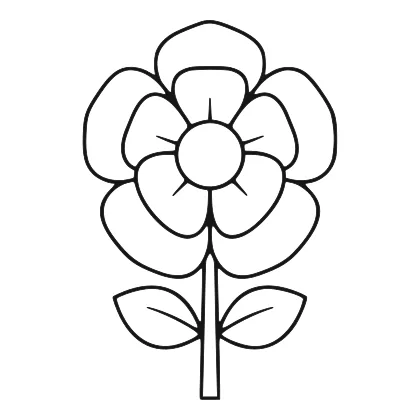
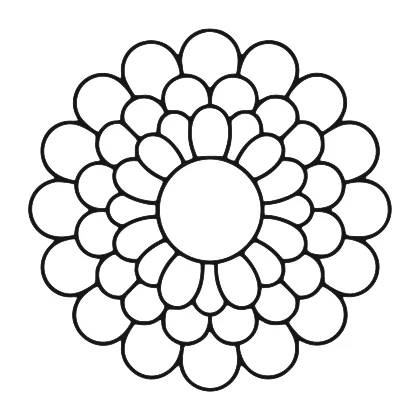
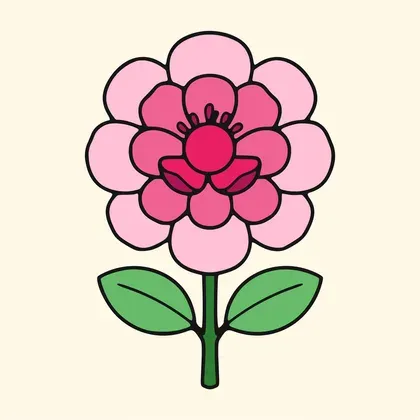
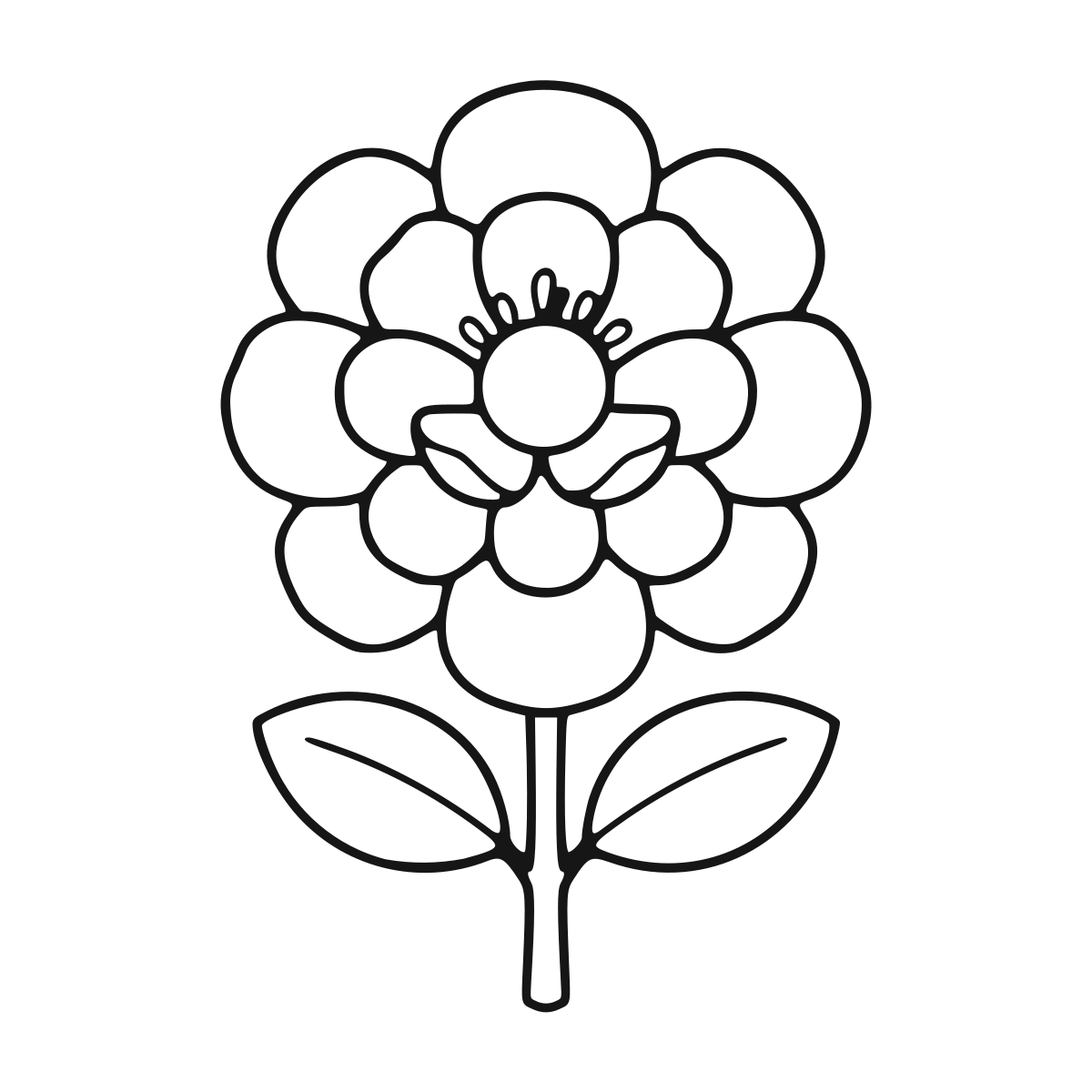
A peony seen face on, built from two rings of broad rounded petals around a plain centre, with a single stem and two leaves below. There are few enough petals here that each one can be treated properly rather than rushed, which makes this a better shading exercise than a denser flower would be. The two rings overlap, and that overlap is where the drawing is won: darkening each petal where it disappears behind the one in front creates the sense that the layers sit on top of each other, which no amount of careful edge work will achieve on its own. Peonies come in a narrow range of real colors and a much wider range of good ones. Printed at A4 each petal is wide enough to hold two or three tones within it, which is where the depth actually comes from. At smaller sizes there is not enough room to blend inside a single petal and the shading flattens out.
Color suggestions
- One hue, four depths, darkest at the centre
- Coral or blush pink shows shading most clearly
- Darken each petal where it passes behind another
- Deep green leaves
Did you know?
- A peony can live for a hundred years in the same spot, and they resent being moved so much that gardeners often leave them where they are for generations.
- The plant is named after Paeon, physician to the gods in Greek myth, who was said to have used it to heal a wound Hercules inflicted.
Frequently Asked Questions
How do I make the petal layers read as layers?
Darken each petal where it passes behind the one in front. That single move does more than any amount of careful outlining, because it is what the eye actually uses to judge depth.
Which color shades most easily?
Coral or blush pink. Deep reds hide tonal changes because the color is already dark, so the shading disappears into it.