Halloween Pumpkin Coloring Page
You might also like
Print or save this sheet
A full-size picture with no website around it. Free to use at home, in a classroom or in a library.
Download PNGAbout this coloring page
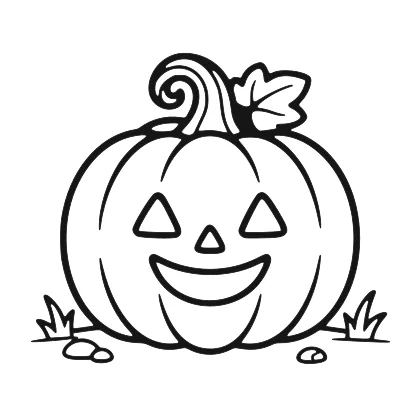
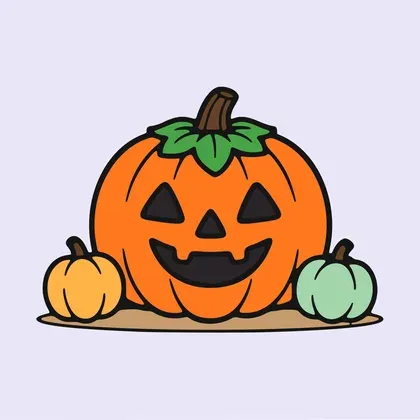
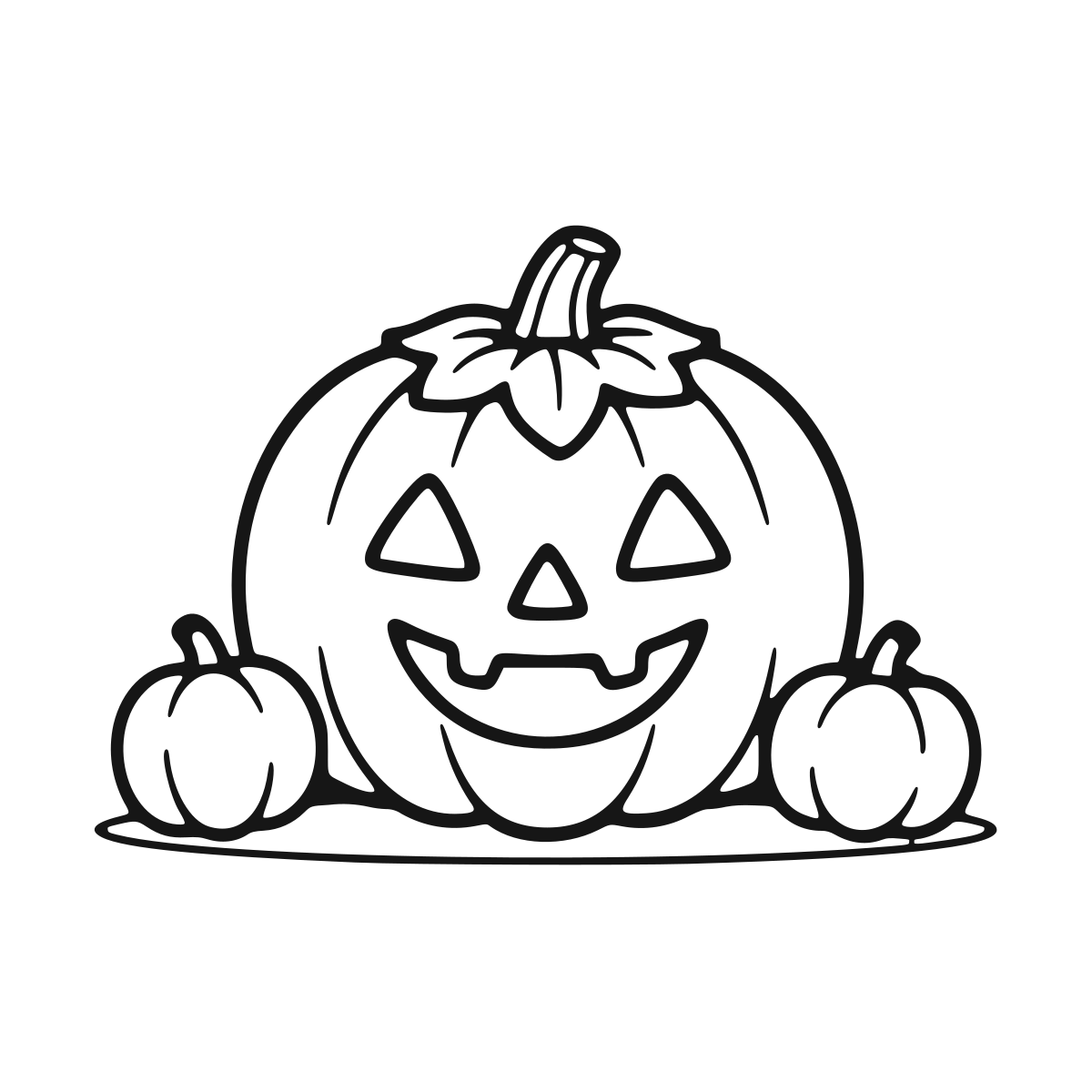
A carved jack o lantern with a stalk, standing beside two small uncarved pumpkins. The carved face is cut out as separate shapes rather than drawn as lines, which means a child can fill the eyes and mouth solidly and get the glowing look without any precision. Filling those black is worth suggesting, because the contrast is the whole point of the drawing and a pumpkin with pale eyes reads as nothing much. The ribs on the body are separated too, so a child who wants to shade can use two oranges without any careful edging. The two smaller pumpkins give somewhere to go once the main one is done, and they are a good place to break the rules: a green or white pumpkin is a real thing and children like being told so. Printed at A4 the group fills the sheet with a clean margin. If markers are the plan, print on paper heavier than eighty gram, because filling the face black with a felt tip will soak through ordinary copier paper. A pumpkin coloring sheet works well printed at half size, four to a page, when you need a stack for a party rather than one careful picture.
Color suggestions
- Two oranges on the ribs
- Black eyes and mouth
- Green stalk
- One white or green pumpkin
Did you know?
- Jack o lanterns were originally carved from turnips and beets in Ireland and Scotland. Immigrants in America switched to pumpkins because they are native, far larger and much easier to hollow out.
- Pumpkins are berries in botanical terms, and specifically pepos, which puts them in the same family as cucumbers and melons rather than anywhere near a vegetable.
Frequently Asked Questions
Should the face be colored black?
Yes, and solidly. The contrast between a dark face and a bright body is what makes the pumpkin look lit, and a pale face loses the effect entirely.
Are pumpkins always orange?
No, and that is worth telling a child. White, green and pale blue pumpkins are all real varieties, which gives them permission to ignore the obvious answer.